
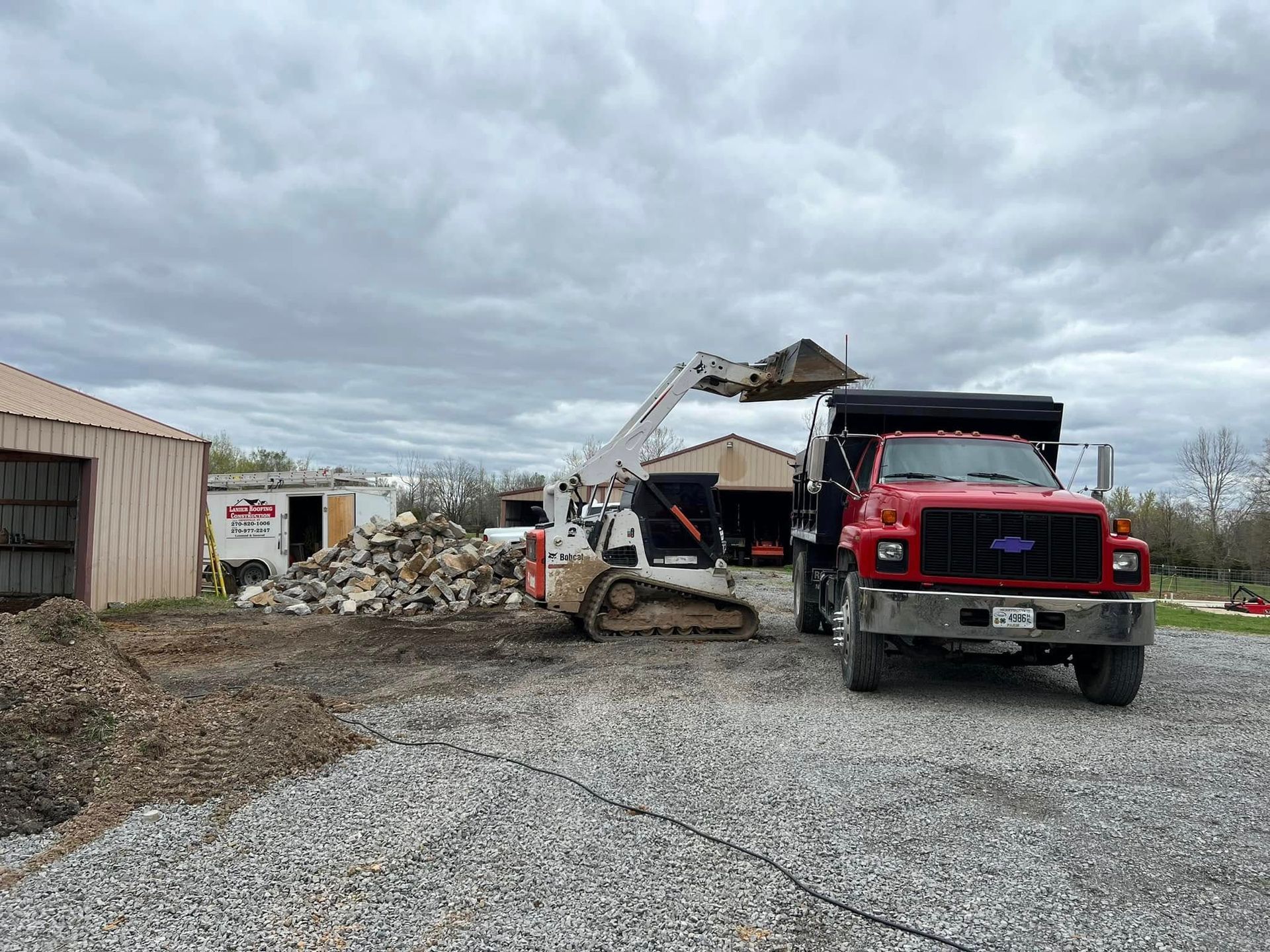
Prepare Your Site for Stable Construction and Drainage
Excavation & Concrete Work in Greenville for properties needing graded land or durable paved surfaces
Lanier Roofing & Construction provides excavation and concrete services in Greenville, Kentucky, for homeowners and builders preparing sites for new construction, driveways, or outdoor living spaces. You may need land graded to prevent water pooling near the foundation, a concrete pad poured for a shed or garage, or a driveway replaced after years of cracking and settling. Proper excavation removes unstable soil and establishes the grade that controls runoff, while concrete work creates durable surfaces that support heavy loads and resist weathering.
Excavation begins with clearing vegetation and topsoil, then using heavy equipment to cut or fill areas until the site reaches the target elevation. Lanier Roofing grades the surface to direct water away from structures and compacts subsoil to prevent future settling. Concrete work follows once the base is stable: forms are built to the required dimensions, gravel or stone is spread and compacted, and rebar or wire mesh is placed to reinforce the slab. Concrete is poured, leveled, and finished with a trowel or broom texture depending on the surface use. Control joints are cut to manage cracking as the concrete cures.
If you are planning construction or paving work in Greenville, contact Lanier Roofing to discuss site preparation and concrete options.
Why Proper Grading and Concrete Reinforcement Matter for Longevity
You will notice that a well-graded site sheds water quickly after rain, preventing standing puddles and erosion along foundation walls. Excavation removes organic material and loose fill that would compress over time, causing slabs and driveways to crack or sink. Lanier Roofing uses compaction equipment to densify the subgrade before pouring concrete, reducing the risk of settlement and ensuring uniform support beneath the slab.
After concrete cures, you will see a smooth, level surface that resists cracking and handles vehicle weight without rutting or shifting. Driveways remain stable through freeze-thaw cycles when the base is properly compacted and the concrete mix includes air entrainment for cold weather. Pads and walkways stay level and drain water away from doors and entryways. Concrete finishing techniques such as broom texture add slip resistance, while troweled surfaces work well for enclosed spaces like garages or workshops.
Excavation services also include trenching for utilities, footings, and drainage lines, and grading around structures to meet building code requirements for slope and drainage. Lanier Roofing does not handle septic system installation or large-scale commercial earthwork, but provides excavation and concrete work for residential construction, driveways, patios, and outbuilding foundations common in western Kentucky.
What Homeowners Ask About Excavation and Concrete Projects
Property owners often want to know how site conditions affect project timelines and what steps ensure concrete performs well over decades.
What site preparation is required before pouring a concrete driveway?
You need excavation to remove topsoil and organics, compacted gravel base at least four inches deep, and proper slope to direct water away from the home and toward drainage areas.
How does Greenville soil affect concrete stability?
Clay soils expand and contract with moisture changes, so gravel base layers and proper compaction are critical to prevent slabs from cracking as the ground shifts beneath them.
When is the best time to schedule excavation and concrete work?
Spring and fall provide moderate temperatures and lower rainfall, allowing excavated areas to dry and concrete to cure without extreme heat or freezing conditions that weaken the finished surface.
What thickness should a residential driveway be for vehicle use?
A four-inch slab with wire mesh or rebar reinforcement handles cars and light trucks, but heavier vehicles or frequent traffic may require six-inch thickness and additional steel reinforcement.
How long does poured concrete need to cure before use?
You can walk on concrete after 24 to 48 hours, but full curing takes about 28 days, and you should avoid driving heavy vehicles on driveways for at least seven days after pouring.
Lanier Roofing & Construction works with Greenville property owners to plan excavation and concrete projects that fit site conditions, budget, and intended use. Call to schedule a site visit and receive an estimate for grading, foundations, or paving work.